
#InternationalDayOfPersonswithDisabilities
Fostering Disability-Inclusive Societies
Each year on 3 December, the United Nations marks the International Day of Persons with Disabilities (IDPD).
The 2025 theme — "Fostering disability-inclusive societies for advancing social progress" -
challenges governments, health systems and organisations to ask:
are we turning commitments into real change?
In Europe, this message continues with the European Day of Persons with Disabilities (EDPD, 4–5 December), which emphasises implementation — ensuring that rights, strategies and commitments translate into measurable actions, from accessibility to inclusive planning and budgets.
More than 1 billion people worldwide experience disability, and this number is growing, driven by increased numbers of people with noncommunicable diseases, who are also living longer and ageing with limitations in functioning.
For people with Myalgic Encephalomyelitis (ME, sometimes referred to as ME/CFS),
this message is particularly urgent.
ME remains widely misunderstood, often excluded from disability assessments,
and overlooked in healthcare and social-care planning.
Too many people with ME are denied care, protection and participation simply because their illness is
not recognised.
Disability inclusion must mean recognising all disabling diseases — including those that are invisible,
complex and stigmatised.
About this article
This article marks the UN International Day of Persons with Disabilities, links it to the European Day of Persons with Disabilities, and describes how the European ME Alliance advocates internationally for people with ME, defending their rights and promoting recognition, protection, and equality within disability and human rights frameworks.
EMEA’s 2025 Work: Turning Awareness into Action
EMEA’s aims are unequivocal: advocate for ME recognition, promote accurate medical information, support biomedical research, and engage constructively with European and national institutions to reduce stigma, improve clinical understanding, and strengthen social protection.
In 2025, this mission is expressed through targeted, evidence-based advocacy rather than general appeals.
- Global engagement (UN)
- European advocacy (EU)
- a pan-European impact assessment on ME,
- inclusion in the EU Disability Rights Strategy 2021–2030,
- coordinated biomedical research programmes, and
- funding for clinical education and healthcare pathways. (EMEA EU news)
- Regional health system support (WHO Europe)
In September, EMEA submitted formal input to the 4th UN High-Level Meeting on Noncommunicable Diseases, calling for ME to be recognised in global NCD frameworks and universal-health-coverage planning. This ensures the condition is included in international health and disability strategies. (EMEA UN news)
In August, EMEA presented proposals to the European Commission advocating for:
EMEA has contributed to implementing the WHO European Framework for Action on Disability and Health, promoting recognition of ME in national health strategies, service planning, and disability policy. (EMEA WHO news)
Driving Inclusion: Research, Recognition, Awareness
EMEA’s work reflects the IDPD and EDPD themes through three pillars:
- Driving Research: Supporting biomedical studies to improve diagnostics, biomarkers, and treatments.
- Advancing Recognition: Promoting ME as a severe neurological disease recognised by healthcare professionals, policymakers and communities.
- Raising Awareness: Engaging researchers, clinicians, patients and carers to challenge stigma and ensure people with ME are truly seen, heard, and valued.
A Message for 2025
Disability inclusion must be designed into policy, funding, services and public health, not added afterwards. EMEA’s work shows this is achievable: frameworks are being implemented, research funding is increasing, and structured proposals are being considered at European and national levels.
On this International and European Day of Persons with Disabilities, EMEA reaffirms its commitment: to ensure ME is recognised as a severely disabling illness.
Genuine disability-inclusive societies leave no one behind.
Who We Are
The European ME Alliance (EMEA) is a network of national patient organisations and charities united in its objective: to improve the lives of people with ME across Europe.
We advocate for:
- Human rights for all patients
- Evidence-based care grounded in science
- Ending stigma, delays, and harmful treatments
- Funding biomedical research needed for real progress
- Making sure no patient is left behind - no matter how invisible
The Voice for ME in Europe
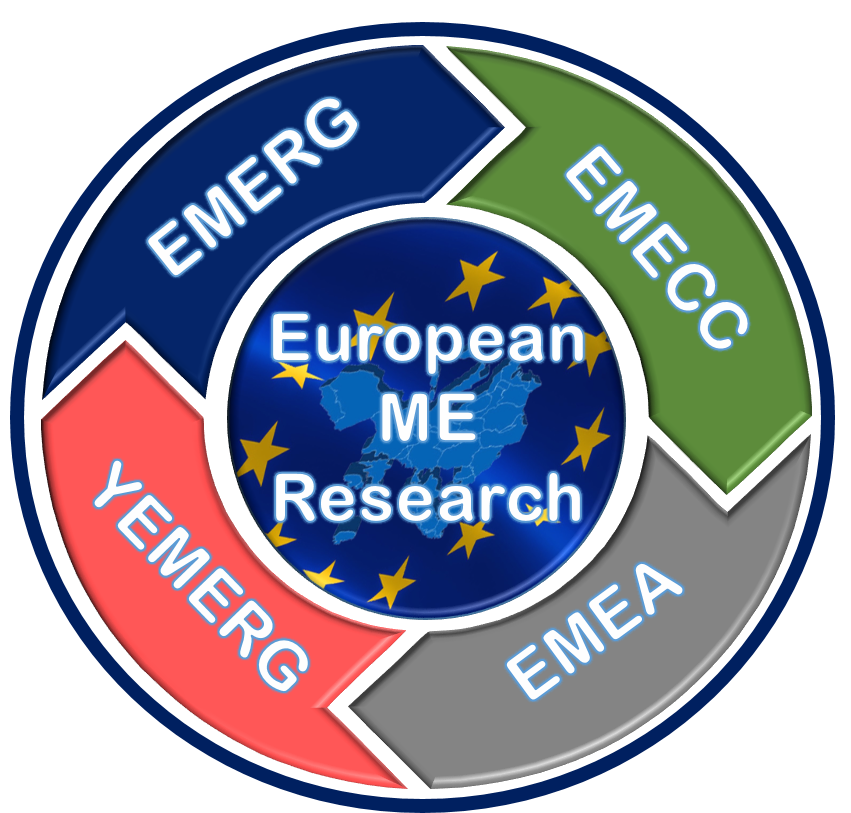
We initiated and support European networks for researchers and clinicians (European ME Research Group)
and for young/early career researchers (Young EMERG) to kickstart collaborative European research in the absence
of official support.
 We are working to ensure ME receives the recognition and resources it desperately needs across the
EU and internationally.
We are working to ensure ME receives the recognition and resources it desperately needs across the
EU and internationally.
EMEA holds non-state actor status with the World Health Organization Regional Office for Europe, allowing
it to participate officially in
WHO regional meetings and advocate for ME at the European public health level.
In addition, we have partnered with the European Federation of Neurological Associations (EFNA), the European Disability Forum (EDF), and the European Patients’ Forum (EPF).
As members of the European Disability Forum we wish to highlight The 2025 European Day of Persons with Disabilities (EDPD) Conference will take place in Brussels on 4-5 December - organised by the European Commission and the European Disability Forum [4].