
International Human Rights Day - 10 December 2025
#HumanRightsDay
Each year on 10 December, Human Rights Day marks the anniversary of the United Nations’ Universal Declaration of Human Rights (UDHR), adopted in 1948.
This document affirms the rights and freedoms to which every
person is entitled - and this includes the right to receive health, equality, and protection
from discrimination.
The 2025 theme is “Human Rights, Our Everyday Essentials” - a theme
that reinforces the view that
these rights are essentials elements of life, with access for all to healthcare and social inclusion.
Human Rights Day and ME/CFS
Myalgic encephalomyelitis (ME, sometimes reerred to as ME/CFS) affects millions of people across Europe, yet far
too many European continue to face delayed diagnosis, limited access to evidence-based treatment,
and widespread
social marginalisation.
For many, daily life is marked by severe disability, isolation, and financial hardship,
all too often worsened by the disbelief and stigma that still remains in healthcare circles
and society at large.
This systemic neglect directly breaches fundamental human rights, including the right to the highest
attainable standard of health (Article 25 of the UDHR) and the right to protection against discrimination.
The persistent stigma and misinformation surrounding ME not only deepens the suffering of individuals but
also obstructs progress
toward equitable care and justice, leaving people with ME struggling to have their basic
rights recognised and upheld.
About this article
This article focuses on Human Rights Day 2025, highlighting how people with ME/CFS in Europe continue to face barriers to diagnosis, treatment, and social inclusion. It explains how these challenges breach fundamental human rights and calls for greater recognition and action to uphold the rights of those affected.
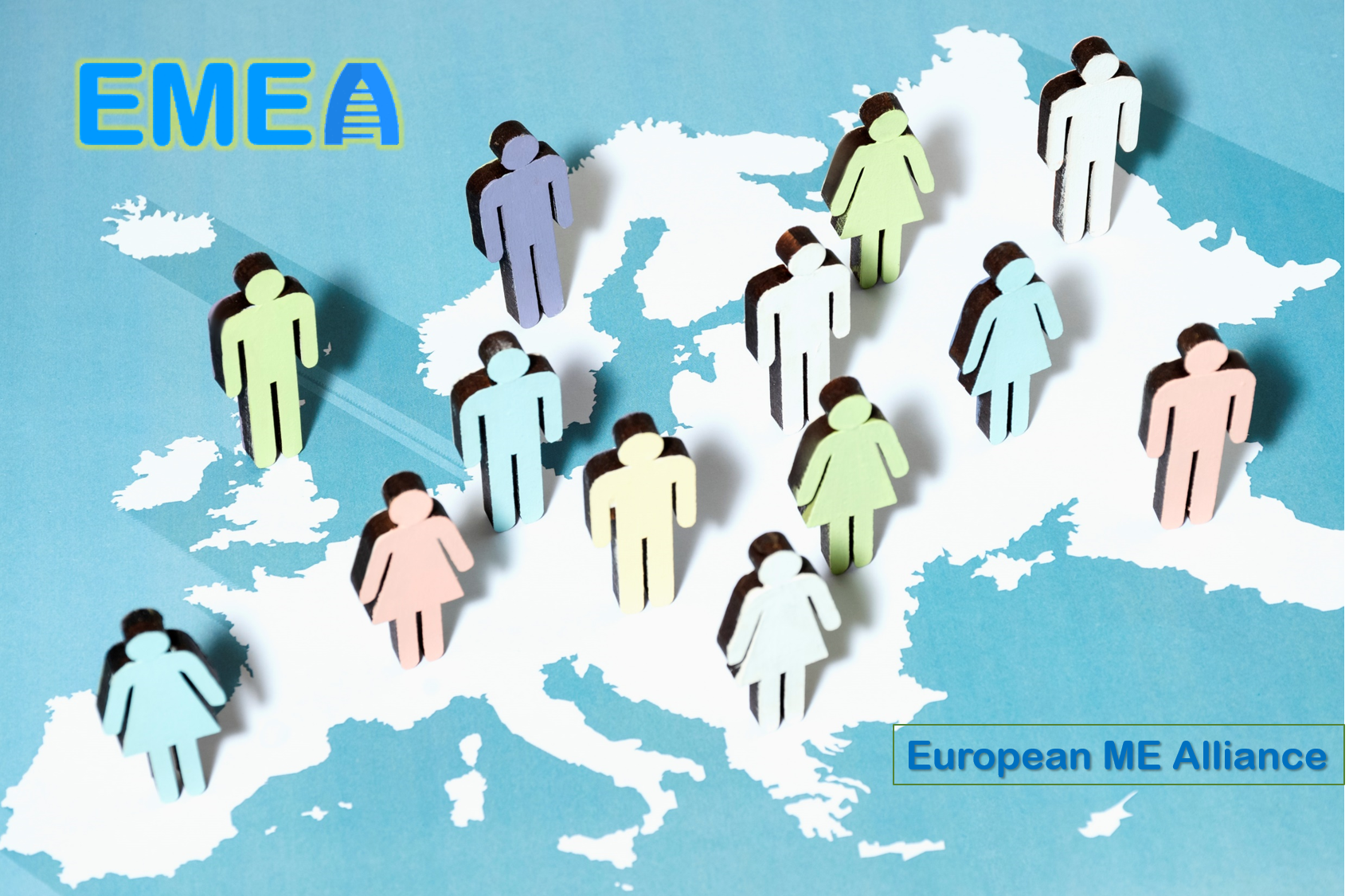
Establishing Human Rights: Research, Recognition, Awareness
Through consistent advocacy and strategic action, the European ME Alliance attempts to make tangible improvements:
- Inclusion in EU Disability Frameworks: EMEA advocates for the explicit recognition of ME/CFS in EU Disability Strategy implementation and funding programmes such as ESF+, ensuring people with ME/CFS access social protection and support equitably.
- Efficient Use of Existing Infrastructure: Instead of calling for costly new structures, EMEA pushes for optimising current healthcare, research, and educational systems. This includes supporting biomedical research coordination through European networks like the European ME Research Group (EMERG) and Centres of Excellence, and promoting inclusion in Horizon Europe and EU4Health projects.
- Standardised Diagnosis and Data: EMEA calls for mandatory standardised coding of ME/CFS diagnoses (using ICD-11 codes) across European health systems to enhance epidemiology, policy-making, and patient care pathways.
- Capacity-Building for Healthcare Providers: EMEA champions accessible, digital training modules and awareness campaigns targeting frontline medical personnel, deployed through existing EU platforms to ensure wider reach without additional costs.
- Active Participation in Disability Rights Events: As highlighted in its recent participation in the European Disability Forum (EDF) Annual Meeting and events surrounding the European Day of Persons with Disabilities (4-5 December 2025), EMEA works alongside key stakeholders to mainstream ME/CFS within broader disability rights agendas.
Human Rights for People with ME - and Their Families
On Human Rights Day 2025, it is important to stress the need to transform words into actions for people with ME, and their carers. Working collaboratively with policymakers, clinicians, researchers, and together with our members and their constituents, EMEA will utilise European structures to enhance care, dismantle stigma, and secure just treatment for all affected.
Human rights cannot just be words and ideals – they must be the basis for dignity, health, and inclusion - rights that every person with ME deserves to fully enjoy.
EMEA
The European ME Alliance (EMEA) is a network of national patient organisations and charities united in its objective: to improve the lives of people with ME across Europe.
We advocate for:
- Human rights for all patients - especially those most severely ill
- Evidence-based care grounded in science
- Ending stigma, delays, and harmful treatments
- Funding biomedical research needed for real progress
- Making sure no patient is left behind - no matter how invisible
We initiated and support European networks for researchers and clinicians (European ME Research Group) and for young/early career researchers (Young EMERG) to kickstart collaborative European research in the absence of official support. In addition, we have partnered with the European Federation of Neurological Associations (EFNA), the European Disability Forum (EDF), and the European Patients’ Forum (EPF).
EMEA holds non-state actor status with the World Health Organization Regional Office for Europe, allowing it to participate officially in WHO regional meetings and advocate for ME at the European public health level. We are working to ensure ME gets the recognition and resources it desperately needs across the EU.