

Germany’s National Decade Against Post-Infectious Diseases:
A Landmark for
Europe’s ME and Long COVID Response
Germany has launched the National Decade Against Post Infectious Diseases (2026–2036) — a ten year commitment to advance biomedical and clinical research on ME/CFS, Long COVID and related conditions. For patients, it offers long overdue recognition and hope for tangible, evidence based progress.
The initiative was formally announced by the German federal government on 13 November 2025, following a budget-committee decision that earmarked around €500 million for post-infectious-disease research over the 2026–2036 period.
The initiative enjoys strong cross-party support within Germany’s governing coalition, with both the Federal Ministry of Health and the Federal Ministry of Education and Research publicly framing the National Decade as a major step toward tackling ME, Long COVID and related conditions as serious public-health priorities.
About this article
This article outlines Germany’s new National Decade Against Post-Infectious Diseases (2026–2036), a ten-year framework for biomedical and clinical research on ME/CFS, Long COVID and related conditions. It highlights key funding commitments, infrastructure plans, and the growing role of patient organisations, and explains how this initiative aligns with EMEA’s call for coordinated, patient-centred action across Europe.
Long Term Lasting Framework for Infectious Diseases
Federal Ministers Nina Warken and Dorothee Bär made clear that people with post infectious diseases will no longer be overlooked. The initiative intends to establish a lasting framework for evidence based progress in diagnosis and treatment, supported by sustainable research capacity.
The ministers also emphasised that the National Decade Against Post-Infectious Diseases initiative builds on existing federal measures rather than starting from scratch.
Key measures of this initiative include:
- Approximately €500 million in biomedical and clinical research funding through the Federal Ministry of Health.
- €118 million for 34 ongoing healthcare research projects through 2028.
- A commitment to maintain existing programmes, ensuring continuity in research and care.
- Early regulatory and care oriented work such as the Long COVID Therapy Compass, with potential G-BA review expected around mid 2026.
Together, these measures signal the federal government's commitment to blending short term action with a long term strategy — essential for lasting progress in research, care and patient outcomes.
The National Decade will close major research gaps by developing the infrastructure long missing for ME and related conditions — including national databases, harmonised cohorts, genome sequencing, biobanks, clinical studies, early career research groups and structured patient participation.
Patient Organisations: Progress, but Priorities Must Remain Clear

The invitation of Fatigatio e.V. to the national launch on 19 November 2025 in Berlin illustrates the stronger institutional role of patient organisations in shaping national policy on post infectious diseases.
EMEA's German member - Fatigatio e.V. - welcomed the National Decade but stresses that funding must remain focused on biomedical research, diagnostic advancement and effective treatments.
Dr Lieseltraud Lange Riechmann, Chairwoman of Fatigatio e.V., stated:
"From the association's point of view, the focus must clearly be on basic biomedical research, the development of diagnostic procedures, and research into new medication – including off label medication. Health services research alone cannot solve the current plight of those affected – there is an urgent need to understand the biological mechanisms of the disease so that effective therapies can be developed."
The organisation also highlighted that ME, Long COVID and Post Vac Syndrome need distinct research approaches; that psychosomatic models cannot address the biological nature of these diseases; that children face significant care gaps; and that access to off-label treatments remains deeply unequal.
EMEA Policy Alignment
EMEA
The European ME Alliance (EMEA) is a network of national patient organisations and charities united
in its objective:
to improve the lives of people with ME across Europe.
Position:
Reflecting EMEA’s long standing call for patient involvement and cross border coordination, the organisation views Germany’s initiative as an important precedent. As reflected in EMEA’s statement: “This recognition represents a meaningful shift — patient organisations are now being heard and actively included. The European ME Alliance welcomes this progress and looks forward to continued collaboration as Germany translates commitment into tangible benefits for all those affected by ME/CFS and related post infectious diseases.”
Germany’s approach provides a strong reference point for other EU Member States and reinforces the case for coordinated, patient centred action at European level.
These priorities align closely with EMEA’s position across Europe.
The 1,228 German respondents to EMEA’s
Pan European ME Patient Survey highlighted the fact that meaningful
support came mainly from family, peers and charities — underscoring the critical role of patient organisations.
EMEA’s strategy has long called for a European wide, evidence based response to ME, grounded in biomedical research, equitable access to care and meaningful patient participation.
Germany’s National Decade initiative aligns with these priorities by embedding structured research funding, infrastructure development and patient involvement into a ten year national framework.
EMEA will refer to this model to influence our ongoing discussions at EU level on ME research, long term care planning and the integration of patient perspectives into health policy and funding decisions.
Finally, a sound approach - accompanied by substantial funding - is matching the calls made by EMEA members for decades.
This is also why EMEA has established initiatives to develop
EMERG (the European ME Research Group), Young EMERG (for early career researchers) and EMECC (European ME Clinicians
Care network) as core pillars of this strategy.
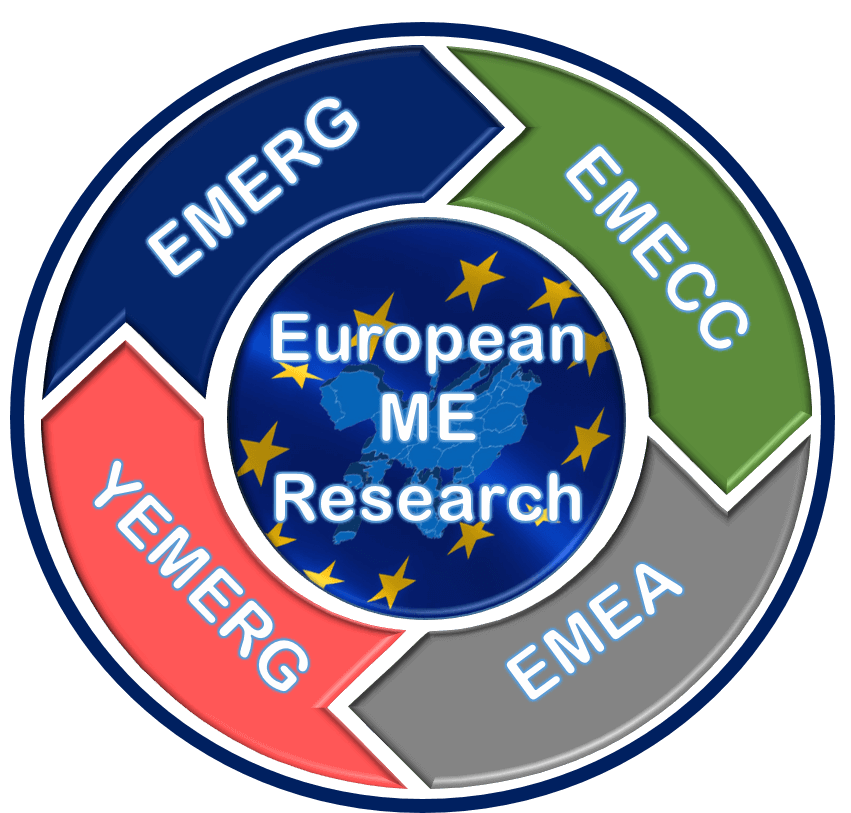
EMERG supports coordinated, high quality biomedical research; Young EMERG focuses on the specific needs and participation of children and young people; and EMECC aims to harmonise clinical standards and improve access to care.
These structures are explicitly mentioned in EMEA’s principles to ensure that research, clinical care and early career researchers are integrated across Europe.
Germany’s National Decade Against Post-Infectious Diseases offers a concrete opportunity to align these EMEA led initiatives with national research and care frameworks, strengthening the European ecosystem for ME, and assisting related post infectious conditions.
Further reading / Sources
- Nature – Long COVID research just got a big funding boost
- Fatigatio e.V. – Summary of the expert discussion on the "National Decade against Post-infectious Diseases" in the Bundestag
- EMEA Questions to the European Commission Parliament
- EMEA Calls for the Inclusion of Myalgic Encephalomyelitis in the Implementation of the Political Declaration of the 4th UN High-Level Meeting on Non communicable Diseases
- EMEA Pan-European ME Patient Survey

Last Update: January 2026